
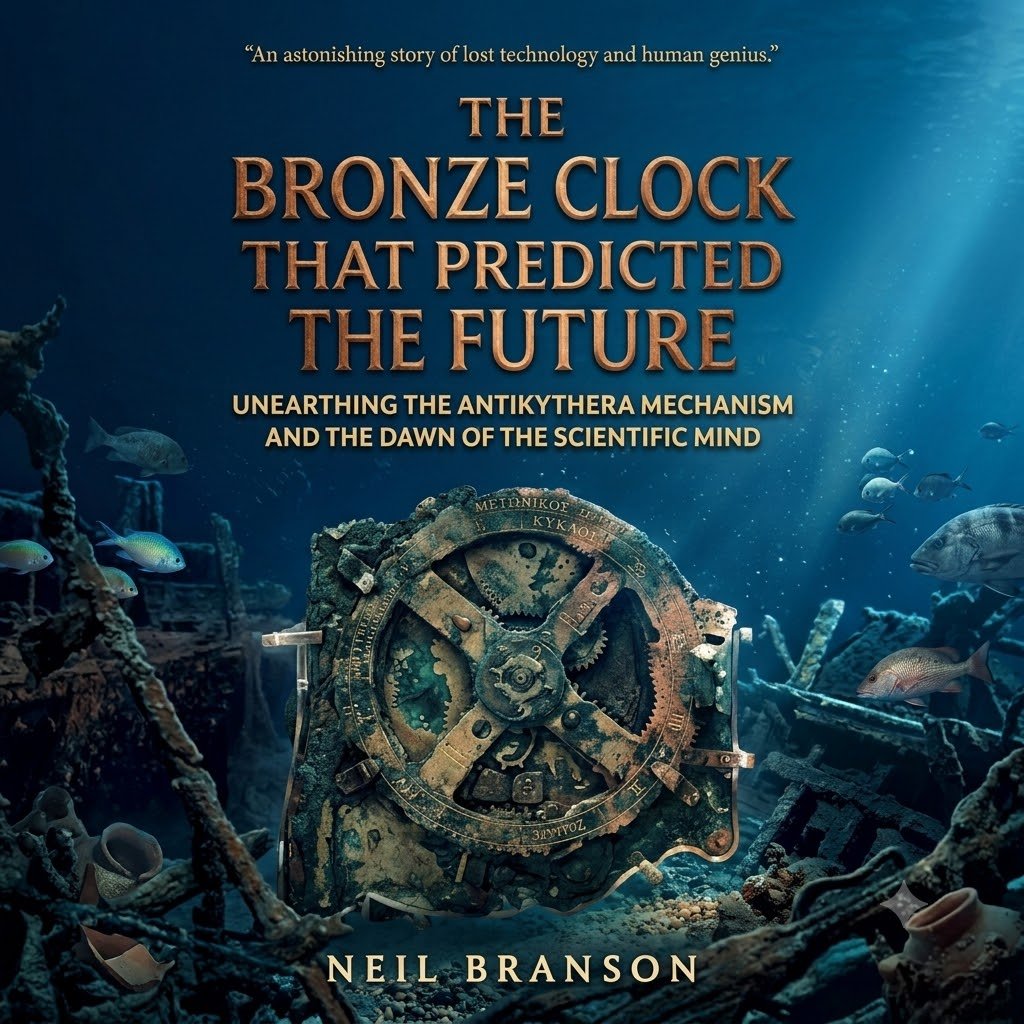
The Bronze Clock That Predicted the Future
In a quiet, dimly lit corner of the National Archaeological Museum in Athens, there is an object that looks like it does not belong to this world. It is not a marble goddess with a serene gaze or a painted vase depicting a hero. It is a lump of calcified green bronze, the size of a thick dictionary, encrusted with the petrified remains of the Mediterranean seabed. It looks like a burnt piece of toast that has been sitting at the bottom of a harbor for two thousand years. In nineteen hundred two, an archaeologist named Valerios Stais was looking at this fragment when he noticed something that should have been impossible. Protruding from the corroded mass was the unmistakable shape of a gear wheel.
It was a small, triangular tooth, no larger than a grain of rice, carved with a precision that would not be matched for another fourteen centuries. This single fragment of metal was recovered from a Roman shipwreck off the coast of the island of Antikythera. The ship was filled with the treasures of the ancient world - - - bronze statues, jewelry, and fine pottery. But this lump, known now as the Antikythera mechanism, was the most valuable thing on board, though no one knew it at the time. We see it now as a jagged, broken puzzle. But for the people who built it, this was a window into the clockwork of the heavens. How did a culture of wood and stone build a computer made of bronze?
No reviews found!








No comments found for this product. Be the first to comment!