
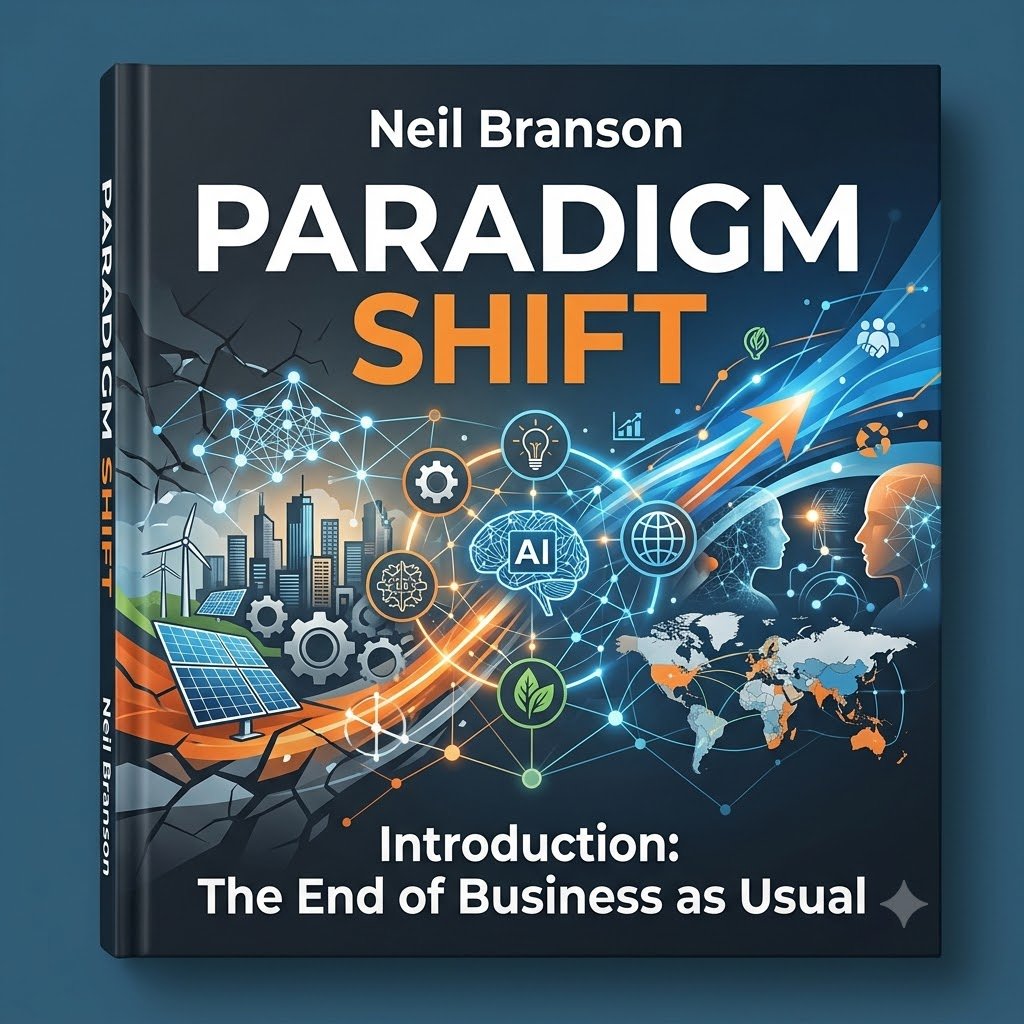
Introduction: The End of Business as Usual
The global business environment has entered a state of what scholars now term a "permacrisis"—a prolonged period of instability where economic shocks, geopolitical tensions, technological disruption, and climate pressures converge . The post-COVID-19 world has rendered traditional management paradigms, rooted in 20th-century industrial thinking, increasingly obsolete . In this new landscape, success demands more than efficiency or scale—it requires agility: the capacity to anticipate, adapt, and thrive amid uncertainty.
This book explores the key trends reshaping strategy and management in the 2020s: the AI revolution, the sustainability imperative, digital transformation, and the paradox of globalization and deglobalization . Drawing on interdisciplinary research—from evolutionary theory to computer science—it argues that sustainable prosperity is achievable through a values-driven, human-centred approach to innovation .
Chapter 1: From VUCA to Perma crisis – Understanding the New Normal
For years, business leaders navigated a "VUCA" world—volatile, uncertain, complex, and ambiguous. But the scale and interconnectedness of today's crises demand a new framework . This chapter traces the transition from isolated disruptions to a state of perma crisis, where multiple challenges—climate change, supply chain fragility, geopolitical conflict, and technological upheaval—coexist and amplify each other.
It argues that outdated economic models, which prioritise short-term shareholder value over systemic resilience, are no longer fit for purpose. The chapter introduces the Future Management paradigm as a pathway out of crisis, emphasizing regenerative mindsets, stakeholder value co-creation, and mindful technology adoption . ... MORE
No reviews found!




No comments found for this product. Be the first to comment!